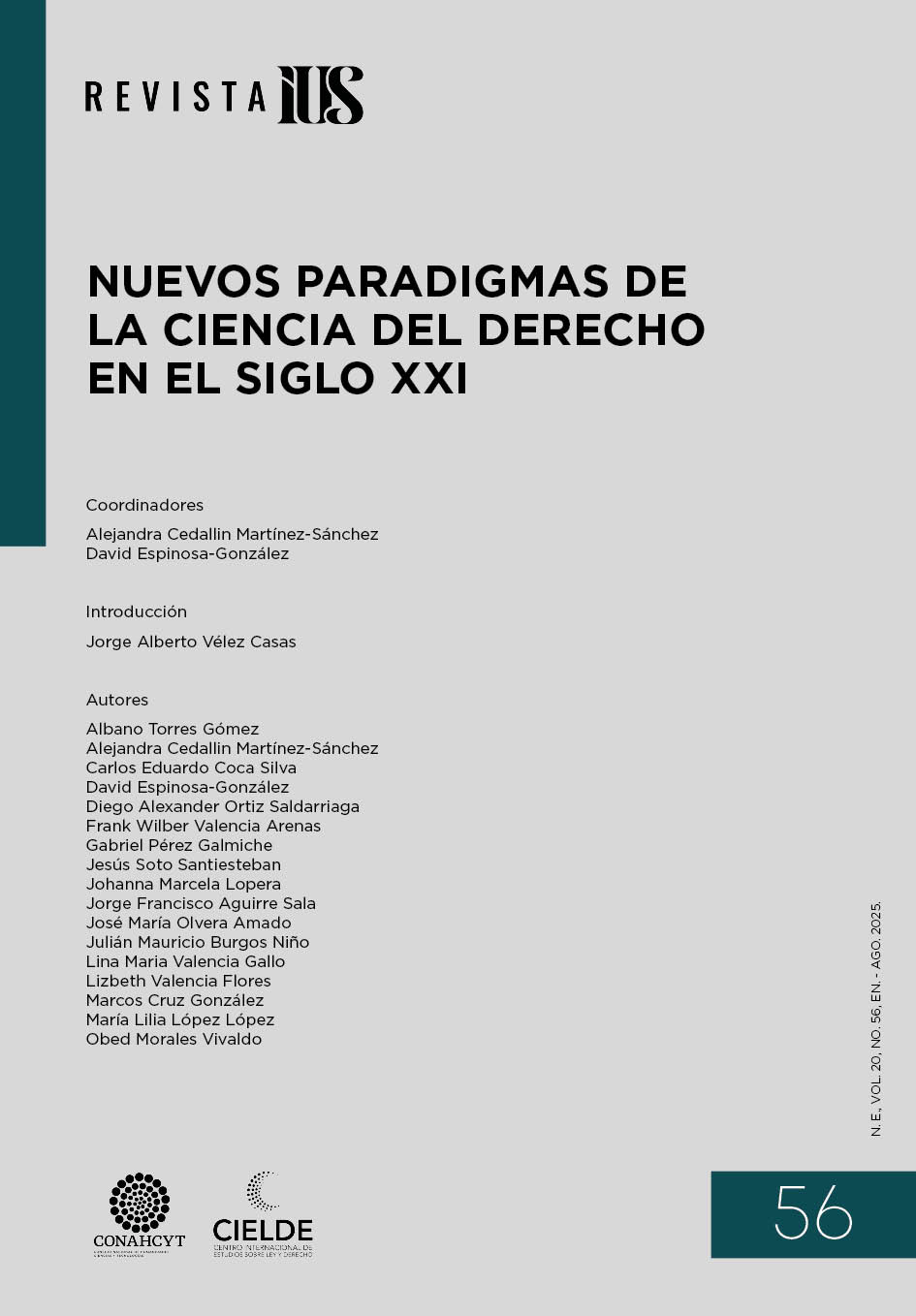
Self-efficacy in the use of artificial intelligence (AI) tools in undergraduate law students
DOI:
https://doi.org/10.35487/rius.v20i56.2025.1068Abstract
This article explores the level of perceived self-efficacy in the use of artificial intelligence (AI) among law students. A quantitative, descriptive, cross-sectional design was employed, with the participation of 49 students who responded to an online questionnaire. The instrument assessed confidence to learn and apply AI in jurisprudence research, drafting legal documents and other academic tasks. The findings show a favorable disposition toward AI adoption, although significant gaps in knowledge and technical proficiency persist. In addition, a large proportion of respondents expressed interest in receiving formal training, evidencing a need for institutional support. Concerns about the ethics and accuracy of AI highlight the importance of addressing these issues within legal training. The study contributes to understanding the challenges and opportunities of integrating emerging technologies into the education of future legal professionals.
Downloads
Downloads
Published
Issue
Section
License
Copyright (c) 2025 Albano Torres Gómez, Alejandra Cedallin Martínez-Sánchez, David Espinosa – González

This work is licensed under a Creative Commons Attribution-NonCommercial-ShareAlike 4.0 International License.
Revista IUS, published by the Legal Sciences Institute of Puebla A.C., is distributed under the Creative Commons Attribution-NonCommercial 4.0 International (CC BY-NC 4.0) license.
We authorize collaborators to upload a copy of their published work on their personal websites or any Open Access repository, provided that Revista IUS is specifically cited as the original source, indicating the year and issue of the respective example and adding the link to the webpage on which this publication can be freely consulted in toto and without charge: http://www.revistaius.com
Readers are free to:
Share, copy and redistribute the material via any medium or format.
The licensor cannot revoke these freedoms as long as you follow the license terms.
Under the following terms:
Attribution: You must give appropriate credit, provide a link to the license, and indicate if changes were made.
You may do so in any reasonable manner, but not in any way that suggests the licensor endorses you or your use.
NonCommercial – You may not use the material for commercial purposes.
If you remix, transform or build upon the licensed material, its distribution is not permitted.
Charges for managing articles: Revista IUS will not charge for receiving, processing or publishing articles (Article Processing Charge, or APC) submitted by authors.